 Resources
 Campus Life
 Just for you


 My Canyons
  Canvas

News Release
FOR IMMEDIATE RELEASE
NR-06-03-26-Canepa
June 3, 2026
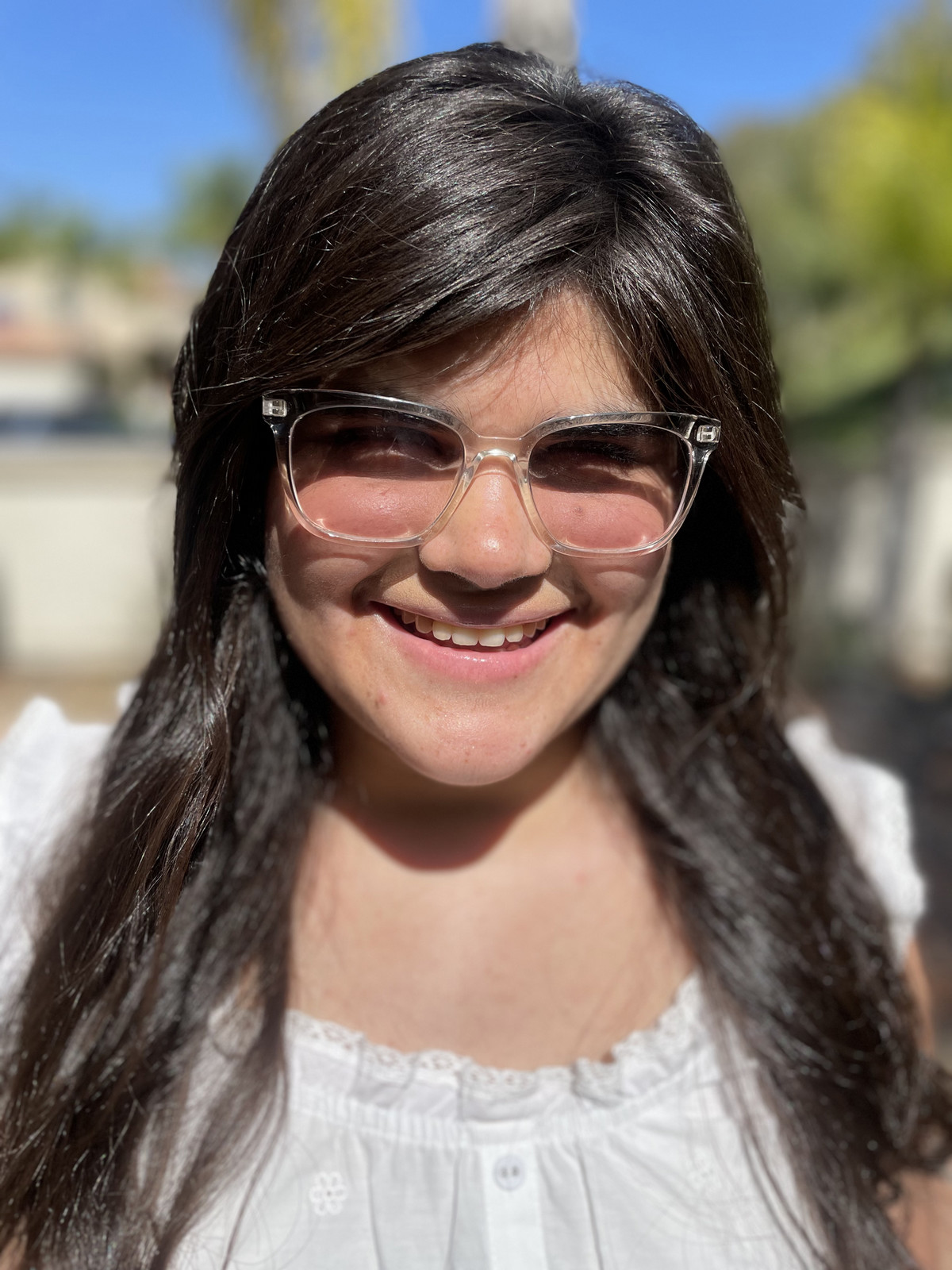
Blind Student Overcomes Barriers to Graduate
Alexa Canepa navigated college with determination and a refusal to let accessibility become an obstacle, proving what’s possible when support and self-advocacy come together.
Like many college students, Alexa Canepa was nervous about taking an online statistics class — but the 19‑year‑old had an additional factor to contend with: she is blind.
Canepa was born with Leber congenital amaurosis, a rare congenital eye disorder that affects the retina.
“My eyes are in perfect condition, but they just can’t receive the information that the brain is giving,” Canepa said.
She approached the course — Psychology 104: Statistics for Behavioral Science — with the same determination and resolve that have carried her through her two years at College of the Canyons.
Canepa, who is graduating on June 5 with an associate degree in psychology, relied on consistent communication with her professors and the college’s Academic Accommodations Center (AAC) to ensure she had the access she needed to complete her coursework.
Building an Accessible Path Forward
Nadia Monosov, Canepa’s instructor for the quantitative reasoning course, had never taught a blind student before and was concerned about the statistical analysis software used in the class.
“It’s a visually intensive program, and I wasn’t sure whether it would be compatible with the tools a blind student would rely on,” said Monosov, who teaches within the psychology department at the college.
With the help of Scott McAfee, an AAC coordinator, an accommodation plan was created that allowed Canepa to rely on sighted assistance to input data into the software.
She also used tools such as Be My Eyes, which could describe graphs and charts to her using artificial intelligence.
“It ended up working out,” said Canepa, who passed the course with a B.
Canepa says McAfee has been invaluable to her academic success at COC.
“He’s been a really big support,” said Canepa. “Any time I've had any issue, I went to him, and he's literally gotten it resolved either that day or the next day.”
A Professor Learns From Her Student
Monosov says Canepa never used her blindness as an excuse to disengage or ask for exceptions.
“She never asked to be treated differently,” recalled Monosov. “She showed up, completed all activities and assignments, and ultimately held herself to the same standard as every other student in the class. Her determination to participate, just like any other student, said everything about who she is as a student and as a person.”
When asked to describe Canepa in one word, Monosov chose “grit.”
“It’s been a while since I’ve used this word, but I think Alexa exemplifies it,” she said. “Alexa never allowed her blindness to become a reason to disengage or hold herself to a lesser standard. She completed everything expected of her, just like any other student."
Working with Canepa reminded her of why accessibility and proactive communication matters, says Monosov.
“She reminded me why it is important to never make assumptions about what a student can or cannot do,” added Monosov. “Alexa showed me that when you give a student the opportunity to show up, they just might show up better than you ever expected.”
The experience of teaching a blind student, Monosov said, has prompted her to reevaluate how she designs her courses, with a renewed focus on accessibility.
“Many students already find math and statistics challenging, so they can act as a barrier even under the best circumstances,” she said. “If these courses are not made accessible, a group of students would be unable to meet this requirement and continue their academic journey.”
Beyond the Classroom
There are days when Canepa feels discouraged by an assignment, especially when her disability makes the work more challenging.
“I always think to myself, well, I have the opportunity to get somewhere in life, so I'm just going to push through it,” she said. “And that’s how I think about things.”
But the challenges of college extended beyond academics.
“I'd say a challenge for me has always been making friends,” Canepa said. “I don't really get any social interaction.”
She relies on a close network of online friends who are also blind for support.
“They understand me the most, but I've always been hoping to get some sighted friends,” she said. “It’s definitely difficult, because some of them don't know how to approach me.”
Canepa wishes more people understood that it’s okay to approach her.
“Identify yourself when you come up to us — tell us your name — and just try to get to know us,” she said. “We're actually pretty cool people if you try.”
Finding Purpose and Strength
Despite the obstacles, Canepa says she’s grateful she chose COC and for the support she received from the AAC and her instructors.
“I see myself as someone who can achieve great things,” she said.
Canepa still can’t quite believe she is graduating and transferring to California State University, Northridge in the fall to continue her psychology studies.
“It feels insane that I made it to this point,” she said. “I think my best accomplishment is that I'm getting an associate degree — and I did it in two years.”
She hopes her story inspires others with disabilities who are considering college.
“Having a disability is an ability,” Canepa said. “There are endless possibilities for anyone. You just have to really put yourself out there. No matter what challenges you have, no matter how severe your disability might be, always know there's a possibility to do anything if you put your mind to it.”
As for her future, Canepa plans to work as a rehabilitation counselor or a behavioral therapist for children.
“I love helping people,” she said. “I'm so interested in how people perceive their own world, and I want to help them make a better society that is inclusive.”
Students with disabilities should not be afraid to advocate for themselves, she added.
“I know it can be really hard to advocate for yourself, but I promise once you do, it's so much better for you,” said Canepa. “You never know what support someone could have that could change your life, and that's what I found out at COC. Your success is up to you, and you get the most out of your success when you have the support that you need.”