
 Resources
 Campus Life
 Just for you


 My Canyons
  Canvas
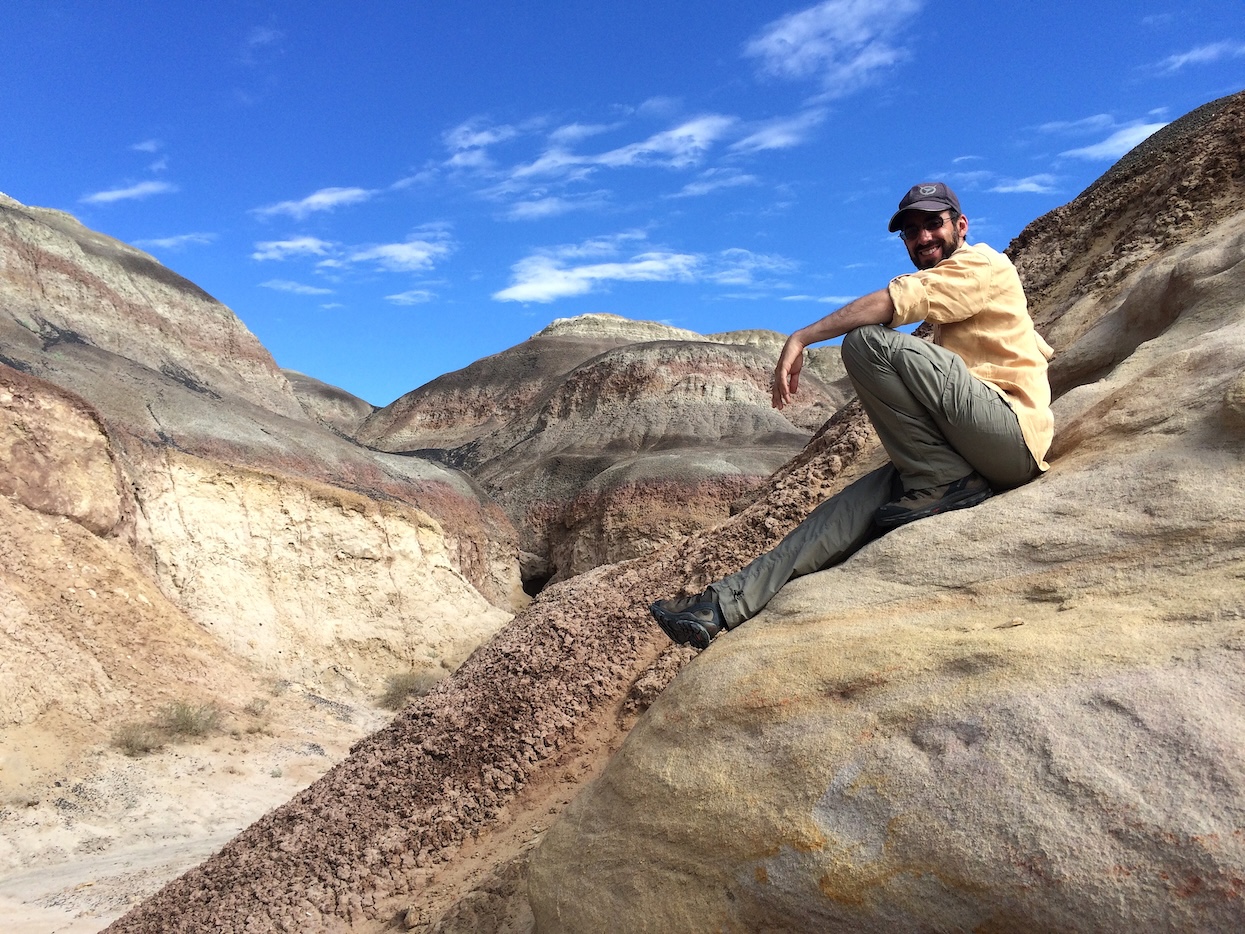 Dr. Michael Habib conducts fieldwork during a dinosaur expedition he led for five years with the Natural History Museum of Los Angeles County. The COC adjunct instructor recently lent his expertise as an advisor on the Netflix hit docuseries "The Dinosaurs." Download Photo.
FOR IMMEDIATE RELEASE
NR-03-12-26-dinosaurs
March 12, 2026
COC Professor Helps Brings Netflix's "The Dinosaurs" to Life
When Dr. Michael Habib isn’t teaching anatomy and physiology at College of the Canyons, he is using his skills and expertise to help audiences around the world see dinosaurs in a new light.
Most recently, he served as a scientific advisor, technical closer, and lead sound development advisor on the hit Netflix miniseries “The Dinosaurs,” which made a strong debut to No. 1 on the streaming platform’s charts, garnering over 10.4 million views worldwide.
Produced by Steven Spielberg and narrated by Morgan Freeman, the four-episode series focuses on the 165 million years dinosaurs spent roaming the Earth.
After spending two years working on the series, Habib says seeing it become a global streaming success has been especially rewarding.
“It always feels great to see something you’ve worked on succeed,” said the adjunct COC instructor. “But it’s also wonderful to see just how much global interest there is in paleontology, especially dinosaurs.”
Habib says his day-to-day work involved collaborating with production teams and researchers across several major studios.
Those included the visual effects artists at Industrial Light & Magic, established by George Lucas, and the sound production team at Films@59.
Leaning on his expertise as a paleontologist and anatomist, Habib played a key role as a technical “closer,” helping visual effects teams troubleshoot scenes that did not look physically realistic.
One challenge involved animating believable underwater motion for digital animals.
“It’s actually quite tricky to make it seem like there’s a dense fluid medium around the digital creatures,” he said. “I ended up building a custom math solution based on swimming physics so the team could generate the correct range of motion automatically.”
In addition to visual effects work, Habib served as the technical advisor for creature sound design throughout the entire series. Working with the Films@59 team, he helped develop sound principles rooted in anatomy and physics.
For example, certain dinosaur skull structures may have created distinctive resonant sounds. “Thin bony crests would likely vibrate and add a bright or metallic resonance to vocalizations,” he explained.
Habib says one of the goals of the series was to portray dinosaurs as they really lived, unlike the “monster” version of science fiction and fantasy films.
“I hope that people generally take away an image of dinosaurs as real animals that fundamentally did the same things as animals today,” said Habib. “I am pleased that the show paints a more realistic picture of predators and predation, and its risks. Predators want a meal, not a showdown.”
That means dramatic battles between large predators and well-armored dinosaurs were likely rare.
Habib says his interest in paleontology began in childhood through a fascination with dinosaurs and the history of life on Earth.
“I have long been fascinated by Deep Time and the story of life on our planet,” said Habib.
After earning his undergraduate and master’s degrees from University of Virginia, he completed his Ph.D. at the Johns Hopkins School of Medicine.
His expertise and current research bridges evolutionary biology, engineering, geology, anatomy and art, disciplines that all intersect in paleontology.
Originally a self-taught illustrator, he later received formal training as a scientific illustrator while studying functional anatomy during his doctoral work. He leverages this training on entertainment projects, including “The Dinosaurs” – producing storyboard art and editing digital creatures.
“This was not a standard part of the program, but I was given a special opportunity to train across departments, which goes to show that knocking on some doors and 'putting yourself out there' can yield results,” said Habib.
In addition, he has previously published on bird sound production and the human voice, expertise that helped inform the show’s approach to dinosaur acoustics.
Because of his unique interdisciplinary knowledge and skills, Habib regularly gets recruited to work on film and TV projects. His other recent credits include “Prehistoric Planet” and the Emmy-nominated “Could you Survive the Movies?”
Habib hopes programs like “The Dinosaurs” will spark curiosity about science among younger viewers.
“I’d like to think these shows inspire people to study paleontology,” he said. “I get enough positive feedback from youth related to these programs that I strongly suspect they do.”
For more information about the college’s biological and environmental sciences department, please click here.