
 Resources
 Campus Life
 Just for you


 My Canyons
  Canvas

Respondus LockDown Browser + Respondus Monitor
Overview
Respondus LockDown Browser is a specialized web browser that locks down the testing environment, preventing students from opening other tabs, copying text, or accessing other applications during an exam.
Respondus Monitor is built directly into LockDown Browser. It uses the student’s webcam to record audio and video during the test, automatically analyzing and flagging suspicious behavior for faculty review.
How to set up Respondus in Canvas
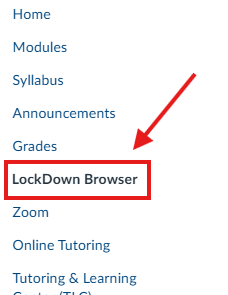
- Click Lockdownn Browser in your course navigation menu (Note: if you don't see this option, go to Settings > Navigation > enable LockDown Browser, click Save, and then you should see it in your course navigation)
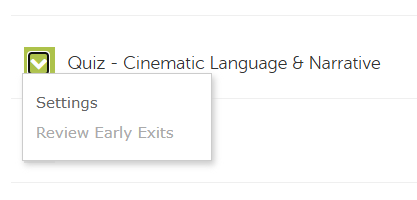
- Locate the quiz that you would like to link to LockDown Browser (and Respondus Monitor); click the downward arrow next to the quiz title and select Settings
- Select Require LockDown Browser for this exam. If you also want to record students taking the exam, select Require Respondus Monitor (automated proctoring) for this exam
- Click Save+Close. On your Lockdown Browser dashboard, you'll now see "Required" under LockDown Browser and "Webcam Recording" enabled under Respondus Monitor
- Provide guidance to students on what to expect, how to prepare, and where to get technical support for online proctored exams
- Create a low-stakes practice Respondus quiz so students can familiarize themselves with the software and testing environment before taking a high-stakes exam
- If you don't want to record the student's quiz-taking process, no action is needed.
- If you want to record the student's face during the quiz, you must enable the iPad setting:
- Under Respondus Monitor section, select Webcam Only or Webcam + Screen
- Expand Advanced Settings
- Select Allow use of an iPad for this exam (screen recording not available for iPad)
- Expand Advanced Settings under Respondus Monitor section
- Select Allow this exam to additionally be delivered in a proctored lab (no webcam or screen recording)
- Enter an Access code for the exam
- Click Save+Close
- Share the access code with the proctor. (Note: Keep the access code secure: Do not share the code directly with students. TLC Testing Center staff will enter it when the student begins the exam)
- Complete the TLC Faculty Proctor Request Form and include the secure access code and all applicable testing instructions.
- Instruct students to visit the TLC Testing Center webpage to schedule an appointment.
- Expand Second camera under Respondus Monitor section
- Select Require students use a second camera in addition to the webcam
Note: Students must use a device, such as a smart phone or tablet, with a camera that can scan a QR code.
For more information, view Using a Second Camera with Respondus Monitor.
LockDown Browser and Respondus Monitor are compatible with the following publisher platforms:
- Pearson MyLab
- McGraw-Hill ALEKS
- Cengage WebAssign
- Cengage MindTap
- Hawkes Learning
Depending on the publisher, you may need to enable LockDown Browser in your publisher settings or contact your publisher representative.
To view instructions for a specific publisher:
- Click LockDown Browser in your course navigation menu.
- Select the Other Systems tab.
- Review the setup instructions for your specific publisher.
(Note: If you are using Pearson MyLab and require an access code, you will also find it under the Other Systems tab.)
To allow students access to specific external resources during the exam, such as digital textbooks, journal articles, or third-party websites, add those web domains directly in your LockDown Browser settings. For step-by-step instructions, view the Accessing external web domains in LockDown Browser guide.
Instructor Resources
We suggest including the following sample text in your Syllabus and Orientation Letter so students are informed and prepared with the necessary technology to complete an online proctored exam.
Using LockDown Browser and a Webcam for Online Exams
- Select a location where you are comfortable having a video recording taken of yourself and your workspace environment. This area should also be free of distractions and interruptions.
- Turn off all other devices (e.g., tablets, phones, second computers) and place them outside of your reach.
- Clear your desk of all external materials not permitted — books, papers, other devices, etc.
- Before starting the test, know how much time is available for it, and that you’ve allotted sufficient time to complete it.
- Remain at your device for the duration of the test.
- To produce a good webcam video, do the following:
- Avoid wearing baseball caps or hats with brims.
- Ensure your device is on a firm surface (a desk or table). Do NOT have the device on your lap, a bed or other surface where the device (or you) are likely to move.
- If using a built-in webcam, avoid tilting the screen after the webcam setup is complete.
- Take the exam in a well-lit room and avoid backlighting, such as sitting with your back to a window.
- Remember that LockDown Browser will prevent you from accessing other websites or applications; depending on your instructors' settings, you may be unable to exit the test until all questions are completed and submitted.
How to Take a Quiz using LockDown Browser
- Ensure that you already installed LockDown Browser.
- Close all programs, unless one is used to connect you to the Internet.
- Locate the "LockDown Browser" application and open it.
- Windows: Locate the desktop shortcut
- Mac: Launch "LockDown Browser" from the Applications folder
- iPad: Open the LockDown Browser app
- Chromebook: Log into your course as usual and launch the test. This will open the LockDown Browser app.
- If prompted, either close a blocked program (e.g. screen capture, instant messaging) by choosing Yes. Or, close LockDown Browser and close the blocked program before restarting.
- After opening the LockDown Browser application, use your MyCanyons account and password to login and open your quiz page.
- Navigate to the test within the course and begin the test.
- At this point, you should be directed to the required checks, such as face detection, and the page will lead you to the "Take Quiz" button.
Note: Your test may also require the use of Respondus Monitor, which will use your webcam to record you during the exam.
Get Help
Having trouble with LockDown Browser? Reach out before your test is due — don't wait until the last minute!
- Technical problems installing or launching LockDown Browser: Contact Online Education at (661) 362-3600 or online@canyons.edu
- After hours assistance: Browse student help guides. or submit a ticket. to Respondus Support
- MyCanyons or Canvas access issues: Contact Admissions and Records at (661) 362-3280 or admissions@canyons.edu
- Questions about the test itself (due dates, attempts, content): Message your instructor through Canvas Inbox or email.
- If a problem happens during a test: Take a picture if you can, then contact your instructor right away to explain what happened.
How to Take a Quiz using LockDown Browser
- If LockDown Browser is already installed on your device, it will launch automatically when you start a quiz that requires it.
Note: If you plan to take quizzes on an iPad, let your instructor know so they can enable access. - If prompted that a program is blocking LockDown Browser, either close a blocked program (e.g. screen capture, instant messaging) by choosing Yes. Or, close the blocked program manually and then restart the quiz.
- At this point, you should be directed to the required checks, such as face detection, and the page will lead you to the "Begin" quiz button.
Note: Your test may also require the use of Respondus Monitor, which will use your webcam to record you during the exam.
Get Help
Having trouble with LockDown Browser? Reach out before your test is due — don't wait until the last minute!
- Technical problems installing or launching LockDown Browser: Contact Online Education at (661) 362-3600 or online@canyons.edu
- After hours assistance: Browse student help guides. or submit a ticket. to Respondus Support
- MyCanyons or Canvas access issues: Contact Admissions and Records at (661) 362-3280 or admissions@canyons.edu
- Questions about the test itself (due dates, attempts, content): Message your instructor through Canvas Inbox or email.
- If a problem happens during a test: Take a picture if you can, then contact your instructor right away to explain what happened.
Is Online Proctoring Right for My Class?
Deciding whether online proctoring is right for your class depends on balancing assessment integrity with student accessibility, privacy, and compliance.
Title V Section 55005 - Publication of Course Standards requires that courses must disclose all required technology, software applications, and exam proctoring expectations to students prior to course enrollment.
- Inform students prior to registration what software and hardware they will need. You can do this via your Orientation Letter and in the comments in the schedule of classes
- Install the software on your personal computer in your personal space to understand the user experience
- Know how you will accommodate students with neuromuscular conditions or disabilities that prompt them to move their bodies in ways that don't conform to the parameters of this product
- Know how you will protect the privacy of non-students who are captured in the recording of the proctoring session (e.g. young children who cannot be left unattended by their parent)
- Know how you will accommodate students who cannot afford a device with a web cam or microphone
- Know how the settings you choose align with the California Privacy Rights Act.
- Provide the option for students to have their exam proctored in person in TLC if they prefer not to use proctoring software.
- Authentic Assessment in Online Learning - COC Faculty Resource course
- Best Practices for Remote Examinations - UC Berkley
- Strategies for Canvas Assignments & Facilitating Activities - Indiana University
- Strategies for Assessing Learning in Canvas - Indiana University
- Strategies for Preventing Academic Integrity Issues - Penn State
- Ideas for Alternative Assessments - LinkedIn
- "the Student Senate for California Community Colleges advocate[s] for the elimination of all proctoring systems … throughout all 116 California community colleges," SSCCC Resolution Elimination of Proctorio and Proctoring Systems, Spring 2022
- Cal State LA's resolution on the use of third-party online proctoring systems, May 6, 2021
- "The pandemic showed remote proctoring to be worse than useless", Doctorow , June 23, 2021
- "Colleges turned to software to catch cheaters during the pandemic - so why are some schools banning it?", MarketWatch, May 18, 2021
- "Schools Are Abandoning Invasive Proctoring Software After Student Backlash", Motherboard Tech by Vice, Feb 26, 2021
- "Class action: Northwestern's online test proctoring wrongly collected face scans, other biometric identifiers" Cook County Record, Feb 5, 2021
- "University of Illinois drops Proctorio due to significant accessibility concerns" Inside Higher Ed, Feb 1, 2021
- "What happens when you close the door on remote proctoring? Moving towards authentic assessments with a people-centered approach" To Improve the Academy, Dec. 21, 2020
- "2000 Parents Petition McGraw-Hill to Stop Using Remote Proctoring Tools" EdSurge, Dec. 17, 2020
- "Automated Proctors Watch Students. Now Senators Are Watching These Companies" EdSurge, Dec. 8, 2020
- "Big Ed-Tech Is Watching You: Privacy, Prejudice, and Pedagogy in Online Proctoring" Brown Political Review, Dec. 6, 2020
- "Blumenthal Leads Call for Virtual Exam Software Companies to Improve Equity, Accessibility & Privacy for Students Amid Troubling Reports" Richard Blumenthal United States Senator for Connecticut, Dec. 3, 2020
- "College Students Are Learning Hard Lessons About Anti-Cheating Software" Voice of San Diego, Nov. 30, 2020
- "Guidance on Online Assessment and Proctoring Software" Contra Costa College Distance Education Committee, Oct. 29, 2020
- "An Exam Surveillance Company Is Trying to Silence Critics With Lawsuits" Vice, Oct. 21, 2020
- "SFSU Academic Senate Resolution on Third Party Proctoring" San Francisco State University, Sept. 2020
- "How It Feels When Software Watches You Take Tests" New York Times, Sept. 29, 2020
- "Students Are Pushing Back Against Proctoring Surveillance Apps" Electronic Frontier Foundation, Sept. 25, 2020
- "Surveillance U: Has Virtual Proctoring Gone Too Far?", YR Interactive